
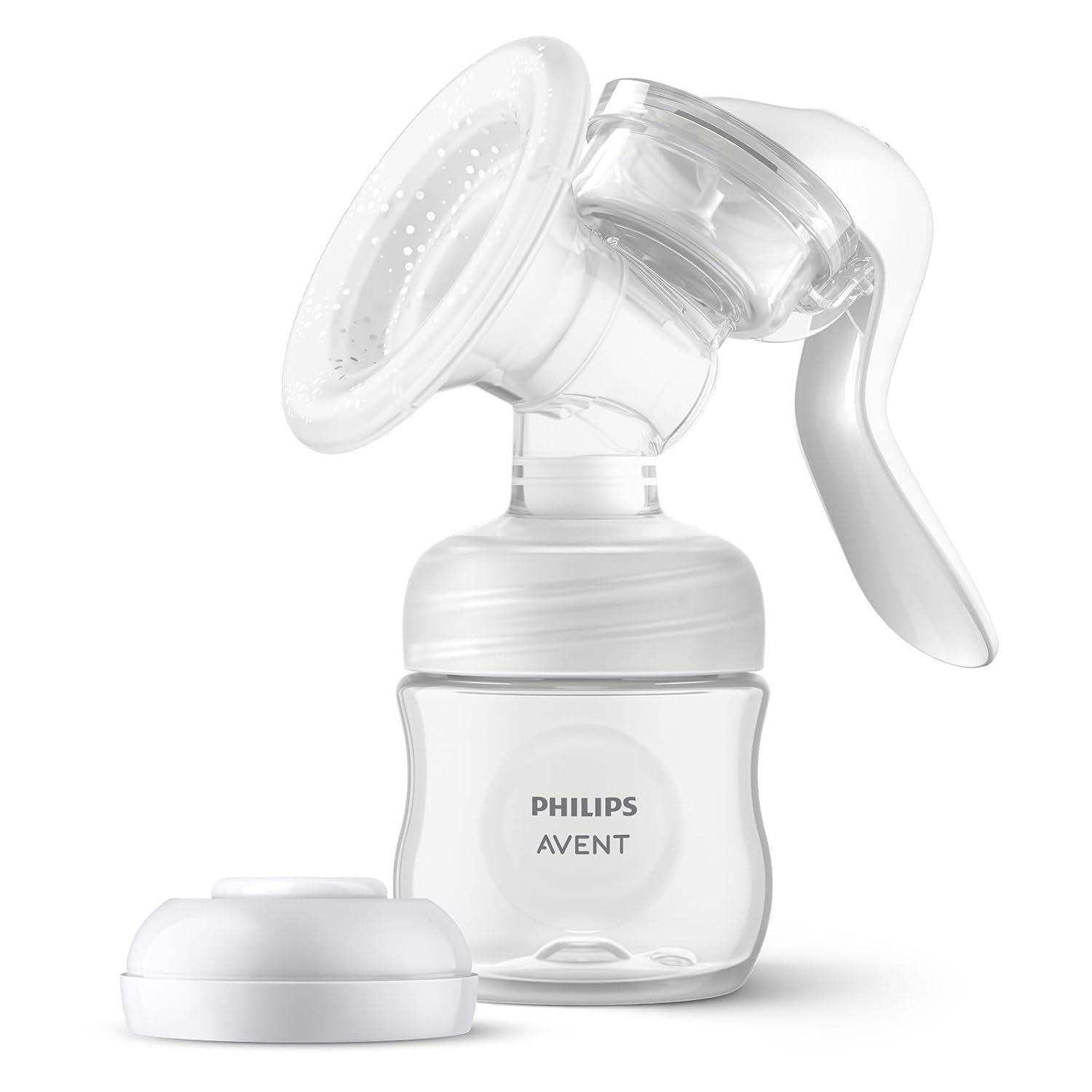
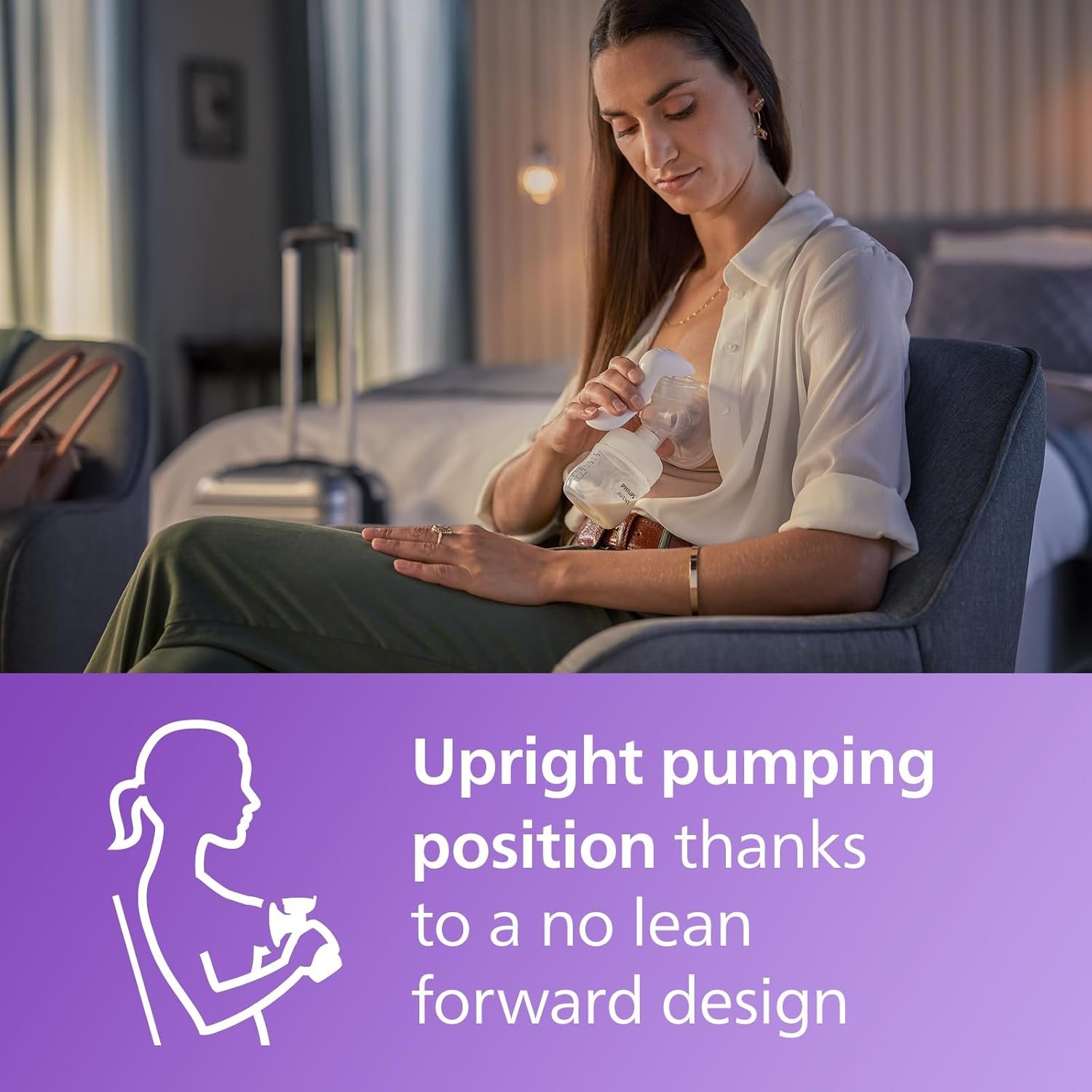
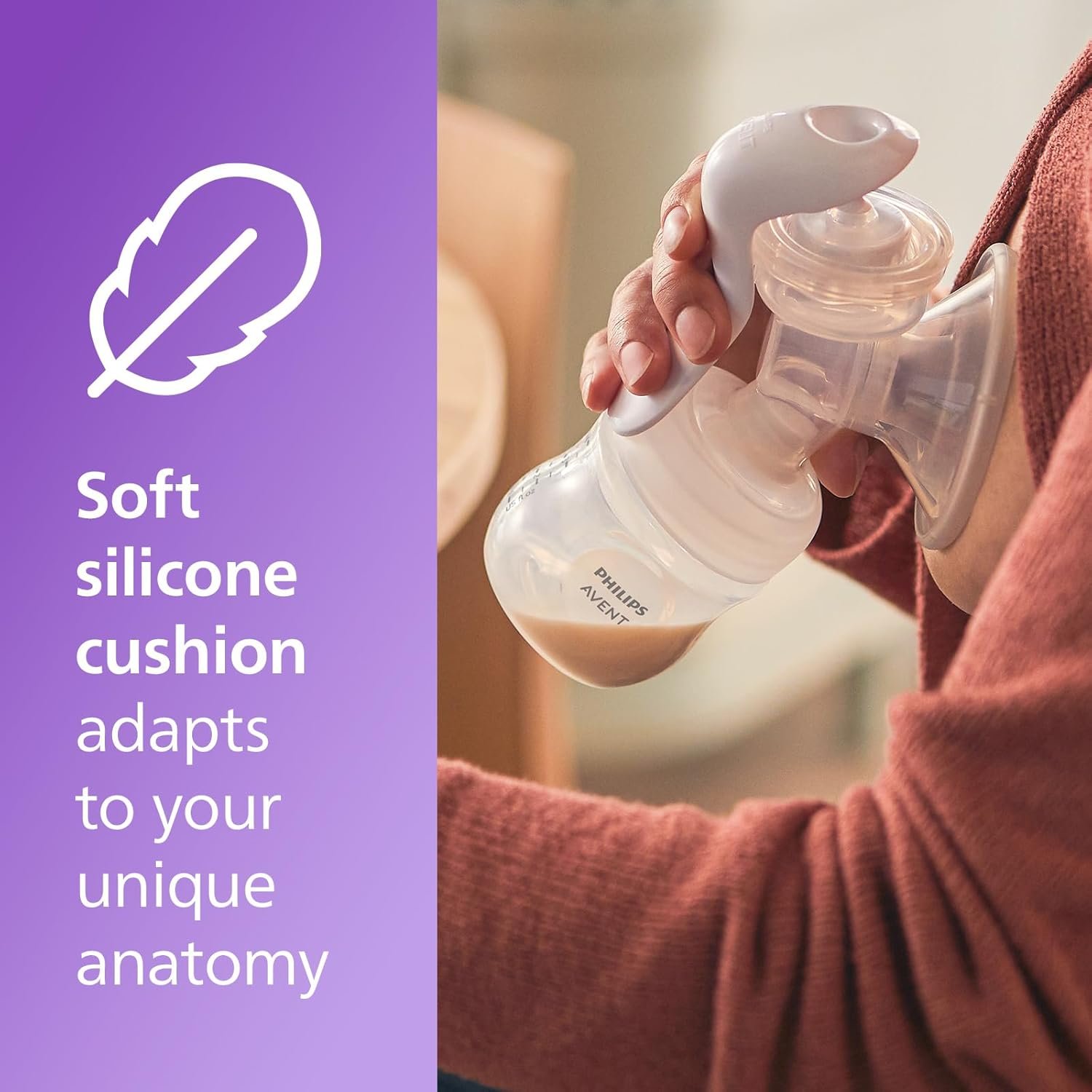
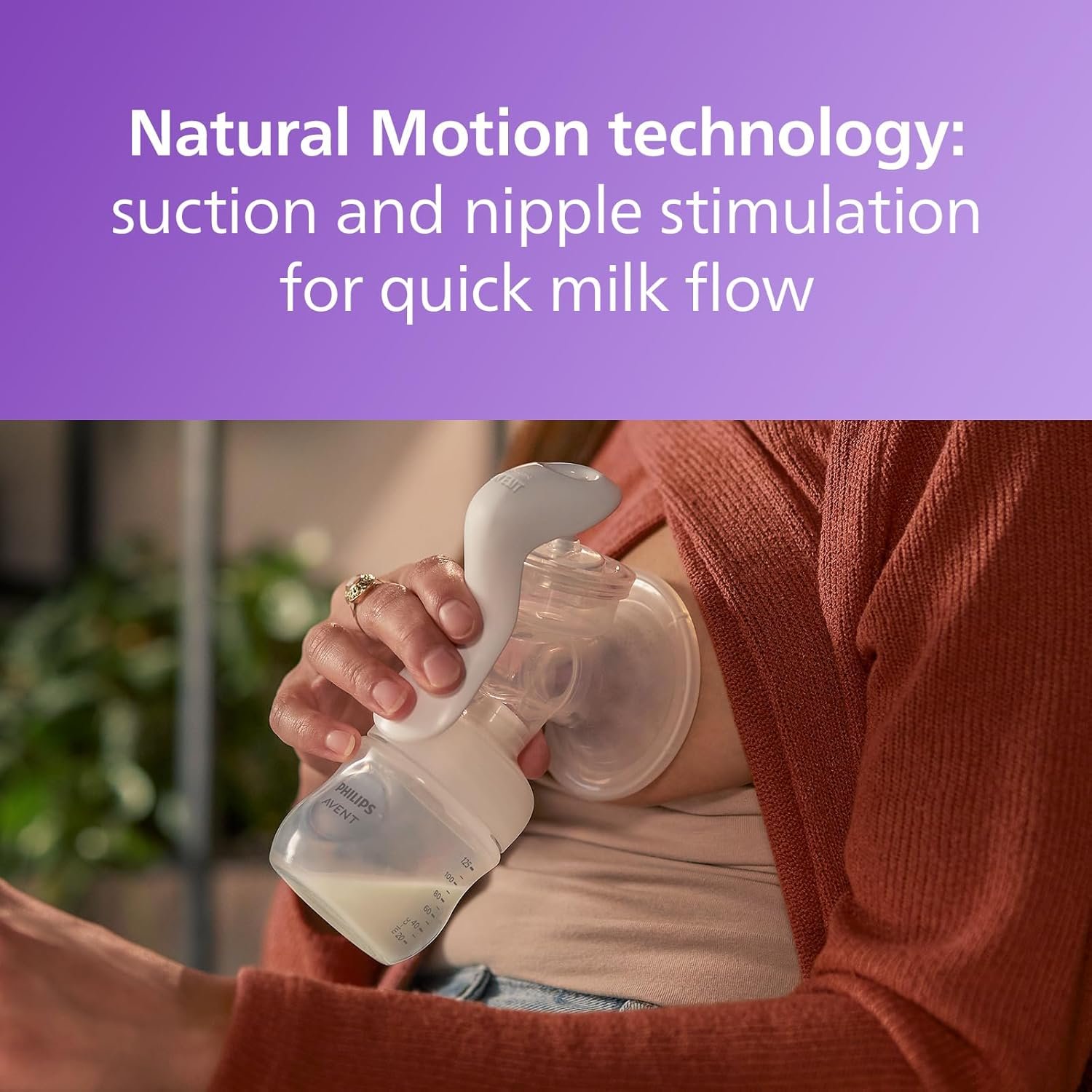

The Philips Avent Manual Breast Pump offers a lightweight and comfortable option for occasional expression. The soft “Natural Motion” silicone cushion is designed to mimic baby’s natural suckling rhythm for a gentler pumping feel, while the compact size makes it easy to use on the go. With an overall 4.3/5 rating, it’s well-liked for portability and simplicity.
See how naturally it can support your daily nursing routine.
A Manual Breast Pump Designed for Flexible, Low-Stress Pumping
An Expert Introduction for Everyday Feeding Support
Not every parent needs a high-powered electric setup for every pumping session. Many are looking for something quieter, simpler, and easy to grab when life doesn’t pause. A manual breast pump fits perfectly into that space, offering control and portability without cords, batteries, or charging schedules.
The Philips Avent Manual Breast Pump is built for parents who want pumping to feel manageable rather than mechanical. It supports occasional pumping, relief between feeds, travel use, or backup situations where simplicity matters most. Instead of overwhelming parents with parts and settings, it focuses on comfort, rhythm, and ease of use.
For many families, this kind of pump becomes an essential support tool rather than a primary system.
First Impressions That Feel Calm and Straightforward
Right out of the box, the manual breast pump feels unintimidating. There are very few parts, and each one feels thoughtfully shaped rather than purely functional. Assembly takes only moments, which is a relief during early postpartum days when patience is thin.
The pump is lightweight and compact, making it easy to hold without strain. Parents immediately notice that it doesn’t feel bulky or awkward in the hand. The handle moves smoothly, without stiffness or resistance that would make pumping uncomfortable over time.
Its minimal design sends a clear message. This pump is meant to support, not complicate.
Build Quality Focused on Comfort and Control
The Philips Avent manual breast pump uses a soft silicone cushion designed to adapt to different body shapes. This “Natural Motion” cushion aims to mimic a baby’s natural latch, which can make expression feel more intuitive and less forced.
Instead of pulling milk through aggressive suction, the pump allows parents to control rhythm and pressure manually. That control is especially valuable for parents with sensitive tissue or those still adjusting to pumping.
The materials feel sturdy and well-finished. Nothing rattles or flexes unnecessarily during use, which helps build confidence from the first session.
Safety and Hygiene Through Simplicity
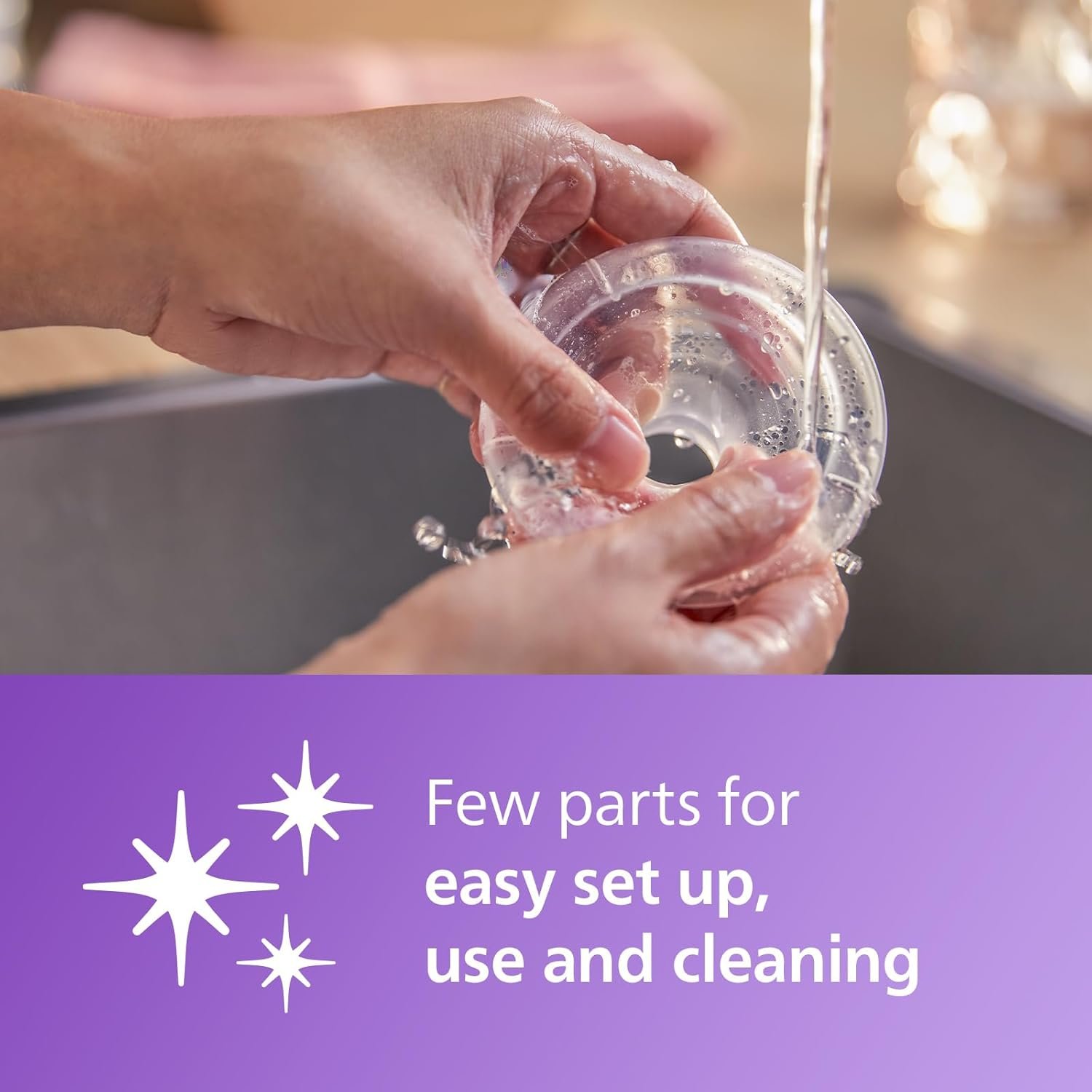
A manual breast pump with fewer parts is often easier to keep clean, and that’s one of this pump’s strongest advantages. Disassembly is quick, and washing doesn’t feel like a separate chore that requires extra time or attention.
Parents appreciate being able to clean everything thoroughly without worrying about small hidden areas where residue might collect. That simplicity supports hygiene without adding stress.
Because there are no electronic components, there’s also less concern about moisture damage or long-term wear from frequent washing.
Why a Manual Breast Pump Still Matters
Electric pumps often dominate conversations around feeding, but manual breast pumps remain deeply relevant. They provide flexibility when pumping isn’t the main focus of the day.
This pump is ideal for relieving fullness, supporting supply during occasional missed feeds, or handling short sessions without setup time. Parents don’t need to commit to a full pumping routine every time.
That flexibility makes a manual breast pump feel empowering rather than restrictive.
Simple, Quiet Pumping for Everyday Flexibility
The Philips Avent Manual Breast Pump is a favorite among parents who want a quiet, portable pumping solution that works without cords or batteries. Its lightweight design makes it easy to use at home or while traveling, especially when feeding routines need to stay flexible. Many families pair manual pumping with mealtime solutions like the Munchkin Float Foldable High Chair for Babies and Toddlers, Easy Storage, which helps keep feeding areas organized as babies grow and begin solids.
Supporting On-the-Go Feeding and Daily Comfort
A manual pump fits perfectly into an active lifestyle when combined with practical baby gear. For quick carrying between feeds, the Tushbaby Hip Carrier The Original Premium Quality Seat Carrier offers hands-free comfort without the setup of a traditional wrap. When milk needs warming away from home, the Best Travel Bottle Warmer 2025: Fast-Heating Portable Warmer Review for On-the-Go Feeding helps keep feedings on schedule. And as babies transition into purees, the Best Baby Puree Maker Baby Brezza One Step Food Steamer Blender supports a smooth move from milk to solid foods, rounding out a feeding routine that grows with your child.
Portability That Fits Real Life
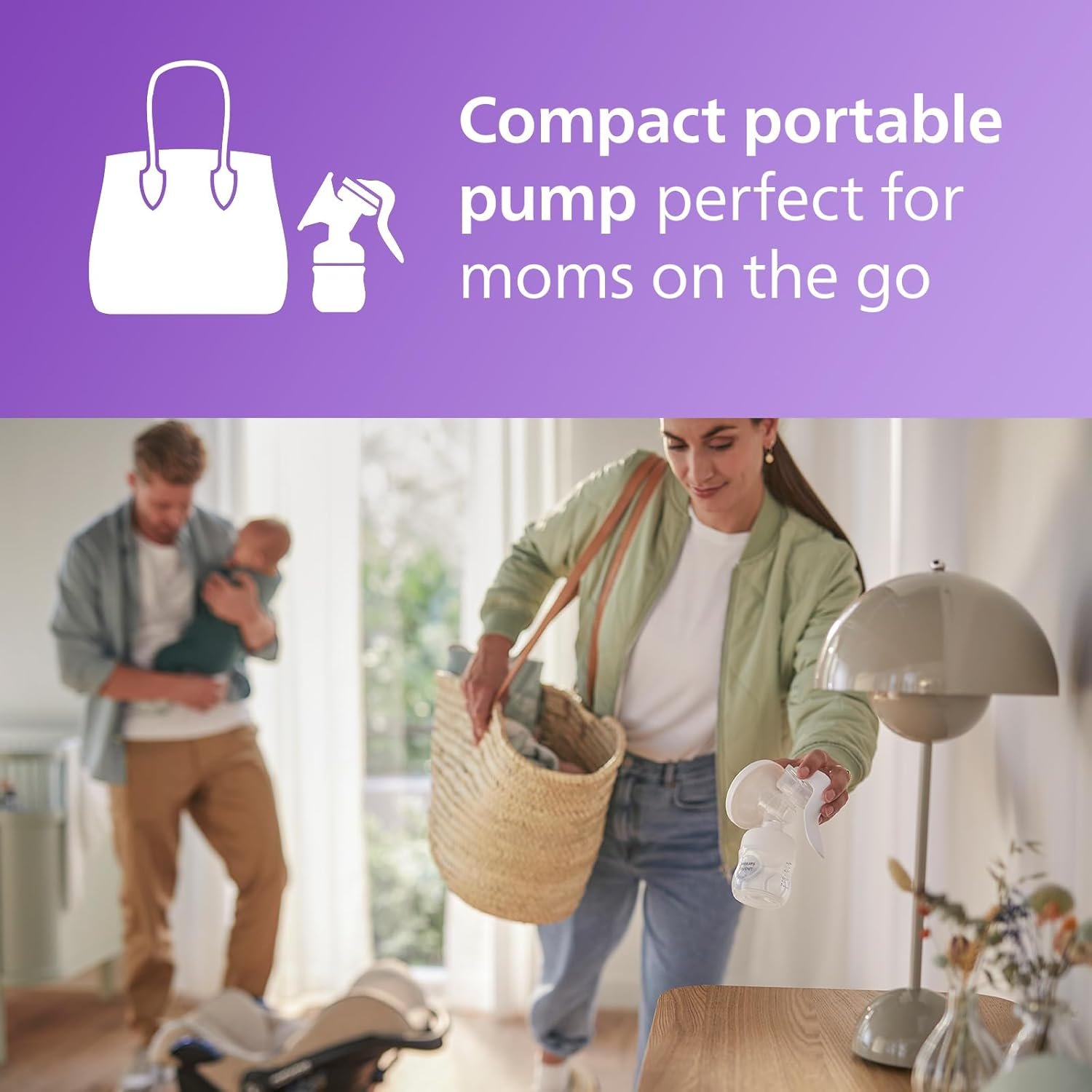
Portability is where this manual breast pump truly shines. It slips easily into a diaper bag, work bag, or carry-on without adding noticeable weight.
Parents traveling with babies often rely on manual pumps during unpredictable schedules. There’s no need to find outlets or worry about battery levels. The pump is always ready.
That reliability makes it especially useful during outings, overnight stays, or workdays where time is limited.
How It Fits Into a Thoughtful Feeding Setup
Many families use a manual breast pump alongside other feeding tools rather than as a standalone solution. For example, parents who rely on an electric pump at home often keep a manual pump as a backup or travel option.
When paired with a calming, structured feeding environment supported by products like the BabyBjörn Bouncer Bliss, parents can pump while their baby rests nearby, keeping routines flexible and connected.
This kind of pairing reflects a balanced approach to feeding rather than an all-or-nothing setup.
Understanding Its Role Without Overpromising
It’s important to be realistic about what a manual breast pump is designed for. It won’t replace an electric pump for exclusive pumping or long, frequent sessions.
What it does offer is reliability, comfort, and control for short, intentional use. Parents who approach it with that understanding tend to be the most satisfied.
It’s not about power. It’s about practicality.
A Gentle Entry Point Into Pumping
For parents new to pumping, a manual breast pump can feel less intimidating than a full electric system. It allows them to learn their body’s response and find a comfortable rhythm without noise or pressure.
That gentler introduction often builds confidence, making feeding decisions feel more manageable rather than overwhelming.
In that way, this pump becomes not just a tool, but a supportive step in the feeding journey.
Using a Manual Breast Pump in Everyday Life
How a Manual Breast Pump Fits Into Real Feeding Routines
Once a manual breast pump becomes part of daily life, parents tend to reach for it in very specific moments. It’s the pump that comes out between feeds when fullness builds unexpectedly, or during a quiet window when setting up an electric system feels like too much.
Because there’s no setup ritual, pumping feels lighter. Parents don’t plan around it. They respond to their body in real time. That responsiveness is often what makes a manual breast pump feel empowering rather than disruptive.
It becomes less of an “event” and more of a supportive tool woven into the day.
Performance During Short, Intentional Sessions
Manual pumping works best in focused sessions, and that’s where this pump performs consistently. The handle movement feels smooth, allowing parents to find a natural rhythm without rushing.
Milk expression feels controlled rather than forced. Parents adjust pressure instinctively, responding to comfort and flow rather than preset levels. This is especially helpful during sensitive periods when gentler suction is preferred.
For short sessions, output often feels surprisingly efficient, especially when parents are relaxed and not watching the clock.
Comfort That Supports Continued Use
Comfort determines whether a pump gets used more than once. The soft silicone cushion plays a major role here, adapting to the body rather than pressing rigidly against it.
Parents often notice reduced discomfort compared to older manual designs, especially during longer hand-pumping sessions. The pump doesn’t feel like it’s working against the body.
That comfort encourages continued use instead of avoidance, which is key for maintaining flexibility in feeding routines.
How Parents Integrate It With Other Feeding Tools
Most families don’t rely on one feeding solution exclusively. A manual breast pump often works alongside other systems that support hygiene and organization.
For example, parents who use a countertop system like the Baby Brezza Bottle Washer Pro appreciate how quickly pump parts can be cleaned after a short session. There’s no buildup of extra chores, which keeps routines manageable.
Similarly, parents who monitor sleep and feeding patterns using tools such as the Nanit Pro Camera often use the manual pump during quiet periods while the baby rests, maintaining closeness without interrupting rest.
This kind of integration makes feeding feel fluid rather than fragmented.
Real-Life Scenarios Parents Instantly Recognize
Many parents describe the same situation. A baby feeds on one side and falls asleep, leaving the other side uncomfortably full. Instead of setting up an electric pump, they grab the manual breast pump and resolve the issue in minutes.
Others rely on it during travel, overnight stays, or workdays where privacy and time are limited. The pump doesn’t draw attention or require special conditions.
It simply works when needed, then goes away just as easily.
Supporting Flexibility Without Pressure
One of the biggest advantages of a manual breast pump is that it doesn’t push parents toward any single feeding identity. It supports combination feeding, occasional pumping, and responsive care.
Parents don’t feel locked into schedules or outputs. They use it when it makes sense and skip it when it doesn’t.
That freedom reduces guilt and stress, which can positively affect milk letdown and overall feeding satisfaction.
Cleaning and Storage in Daily Use
Daily cleaning is straightforward, which matters when energy is limited. Fewer parts mean fewer opportunities for frustration.
Parents often rinse and wash everything quickly, knowing there are no hidden components. Storage is equally simple. The pump fits easily into drawers, bags, or bedside organizers without taking over space.
This ease keeps the pump accessible rather than tucked away and forgotten.
Hand Fatigue and Realistic Expectations
Manual pumping does require hand effort, and parents become aware of their limits quickly. Most naturally use it in shorter bursts rather than extended sessions.
That limitation isn’t a flaw. It defines the pump’s role clearly. Parents learn when it’s the right tool and when a different solution might be better.
Understanding this balance leads to greater satisfaction rather than frustration.
Why It Becomes a Trusted Backup
Even parents who primarily rely on electric pumps often keep a manual breast pump close. It becomes the reliable fallback when batteries die, outlets aren’t available, or simplicity is preferred.
That backup role is deeply valuable. Parents don’t worry about being unprepared. They know they have an option that works anywhere, anytime.
Over time, that reliability builds trust.
A Supportive Tool That Earns Its Place
In daily use, a manual breast pump proves its value through convenience, comfort, and adaptability. It doesn’t demand attention or commitment. It supports parents quietly, on their terms.
For families seeking flexibility rather than intensity, this pump integrates smoothly into real life, supporting feeding routines without adding pressure or complexity.
Long-Term Value, Evolving Needs, and Why a Manual Breast Pump Stays Useful
Supporting Feeding Journeys That Change Over Time
Feeding rarely follows a straight line. Needs shift as babies grow, routines settle, and parents gain confidence. A manual breast pump remains relevant because it adapts easily to those changes rather than locking parents into a single approach.
In the early weeks, it may be used for relief and learning. Later, it becomes a backup, a travel companion, or a tool for occasional expression. Its role changes naturally without requiring parents to rethink how they use it.
That adaptability is what gives it lasting value beyond the newborn stage.
Remaining Useful Even When Routines Stabilize
As feeding routines become more predictable, many tools fade into the background. A manual breast pump tends to stay accessible because it’s simple and non-demanding.
Parents don’t need to plan around it. It doesn’t require setup time or mental preparation. When the need arises, it’s ready, and when it doesn’t, it stays out of the way.
That low-maintenance usefulness is often what keeps it in rotation long after other items are stored away.
Durability Through Consistent, Light Use
Long-term value also depends on how well a product holds up. This manual breast pump is built for repeated use without feeling fragile or disposable.
The handle maintains smooth movement. The silicone cushion keeps its shape and flexibility. Parents don’t experience gradual discomfort or performance drop-off that would make them stop using it.
Because it’s not dependent on electronics, there’s less that can fail over time. That simplicity contributes directly to longevity.
Reducing Dependency on Power and Schedules
One of the understated benefits of a manual breast pump is independence. Parents aren’t tied to charging routines, outlet availability, or technical troubleshooting.
That independence becomes more valuable over time, especially during travel, busy days, or unexpected schedule changes. Parents know they have a tool that works regardless of circumstances.
This reliability fosters confidence rather than dependency on systems that can fail or feel overwhelming.
Supporting Emotional Comfort Around Feeding
Feeding decisions can carry emotional weight. A manual breast pump offers a gentler option that doesn’t push parents toward intensity or constant output tracking.
Because it’s controlled entirely by the user, parents often feel more connected to the process. They respond to their body rather than a machine’s rhythm.
That sense of control can reduce stress and support a more positive relationship with pumping over the long term.
Remaining Relevant as Babies Grow
Even as babies rely less on milk expression, situations still arise where a manual breast pump is helpful. Missed feeds, gradual weaning, or discomfort during schedule shifts are common examples.
Parents appreciate having a familiar, reliable tool during these transitions. The pump doesn’t become obsolete simply because routines change.
Instead, it continues to support comfort and flexibility during each new phase.
A Practical Choice for Multiple Children
Families planning for more than one child often value tools that can be reused without complexity. A manual breast pump fits that need well.
It stores easily between uses and doesn’t age technologically. When it’s needed again, it works the same way it always has.
That reusability adds to its long-term appeal and makes it feel like a thoughtful investment rather than a temporary purchase.
Knowing Its Strengths Without Expecting More
The key to long-term satisfaction is understanding what a manual breast pump is meant to do. It’s not designed for exclusive pumping or high-volume daily sessions.
What it excels at is being available, comfortable, and dependable when simplicity is the priority. Parents who respect that role tend to keep using it with confidence.
Clear expectations lead to sustained usefulness.
Why Parents Rarely Regret Owning One
Even parents who upgrade or rely primarily on electric pumps rarely regret having a manual breast pump on hand. Its presence provides reassurance.
They know they’re covered if plans change, power isn’t available, or a quick session is all that’s needed.
That peace of mind lasts far longer than any single feeding stage.
A Quiet Essential That Endures
A manual breast pump doesn’t demand attention or commitment. It earns its place by being helpful when needed and invisible when not.
Through changing routines, growing babies, and evolving feeding needs, it remains a steady option that adapts without pressure.
For parents who value flexibility, control, and simplicity, a manual breast pump continues to prove its worth long after the first weeks of feeding are behind them.


