
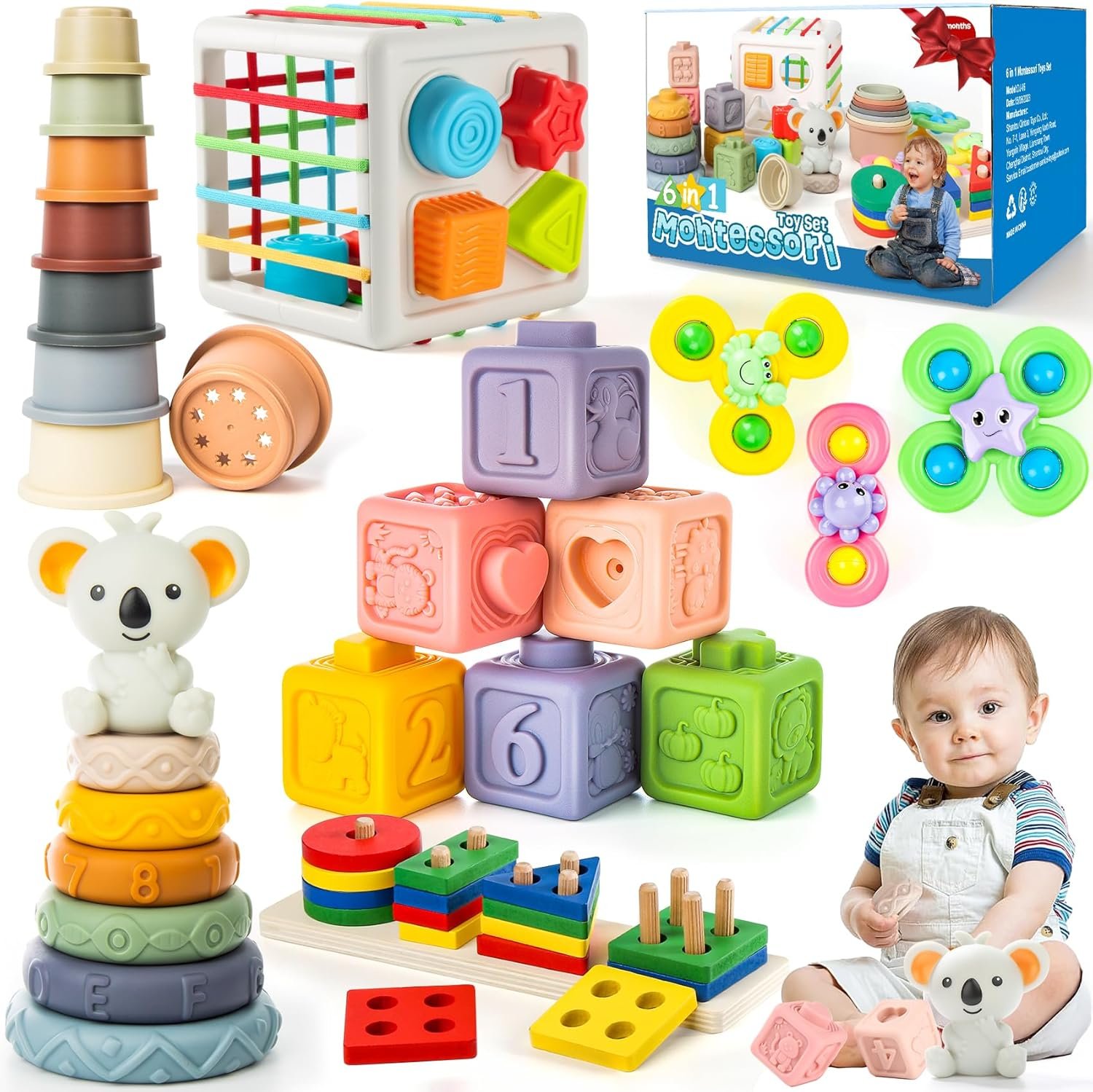
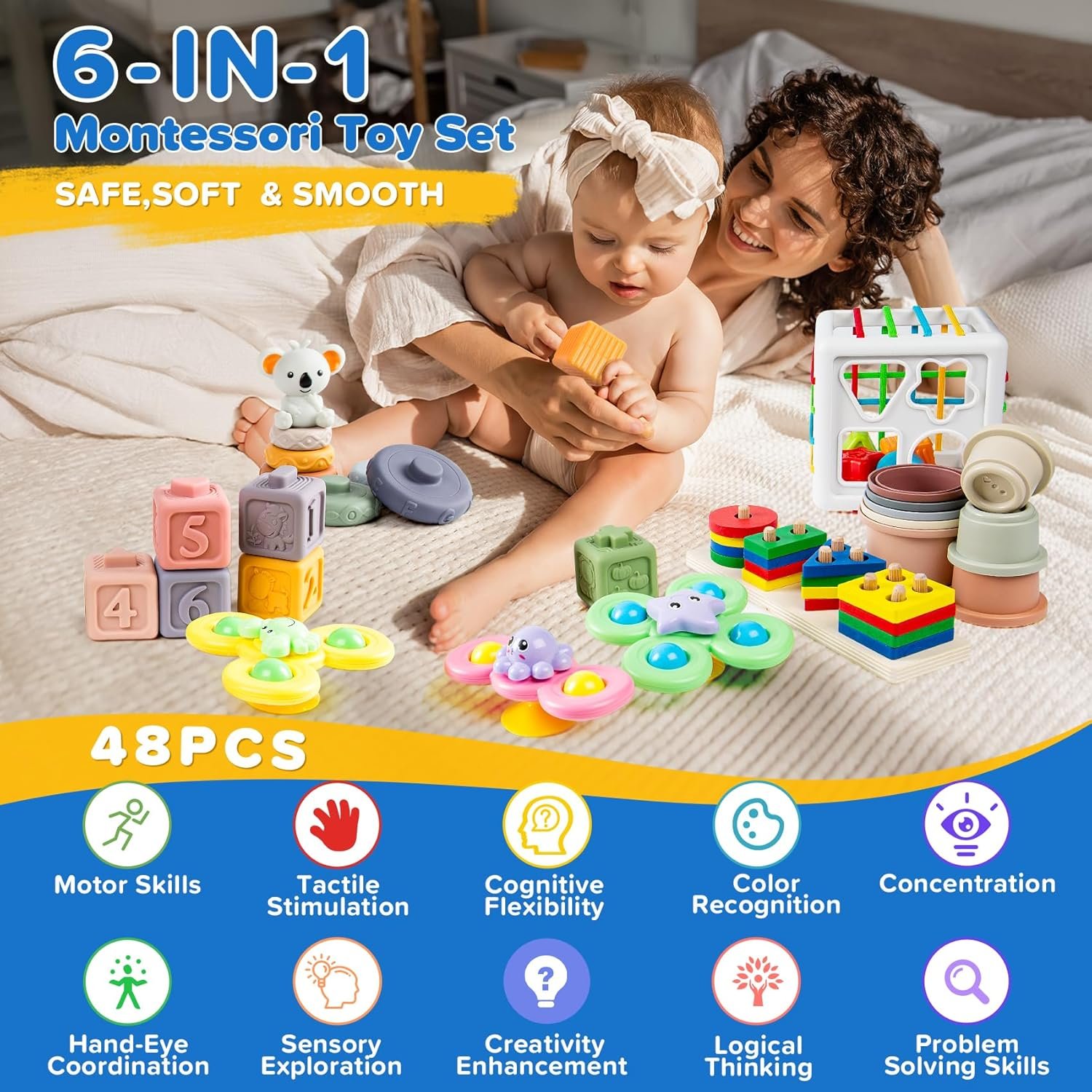
This 6-in-1 Montessori Baby Toy Set combines stacking rings, cups, blocks, a sensory spinner, and sorting play to build fine motor skills, hand-eye coordination, and early color/shape recognition. Made from food-grade silicone and durable ABS (BPA-free) for safe teething, it suits ages 6–18 months+ and cleans easily. Compact for home or travel, it delivers engaging, development-focused play. Backed by a solid 4.5-star Amazon rating, it’s a smart, versatile gift for curious toddlers.

Best Montessori Toys for Babies 6–12 Months
- Overall Rating
- Safety & Material Quality
- Developmental Support & Learning
- Versatility & Multi-Use
- Ease of Cleaning & Maintenance
4.5/5Overall Score
Specs
- Recommended Age Range: 6 months to 3 years
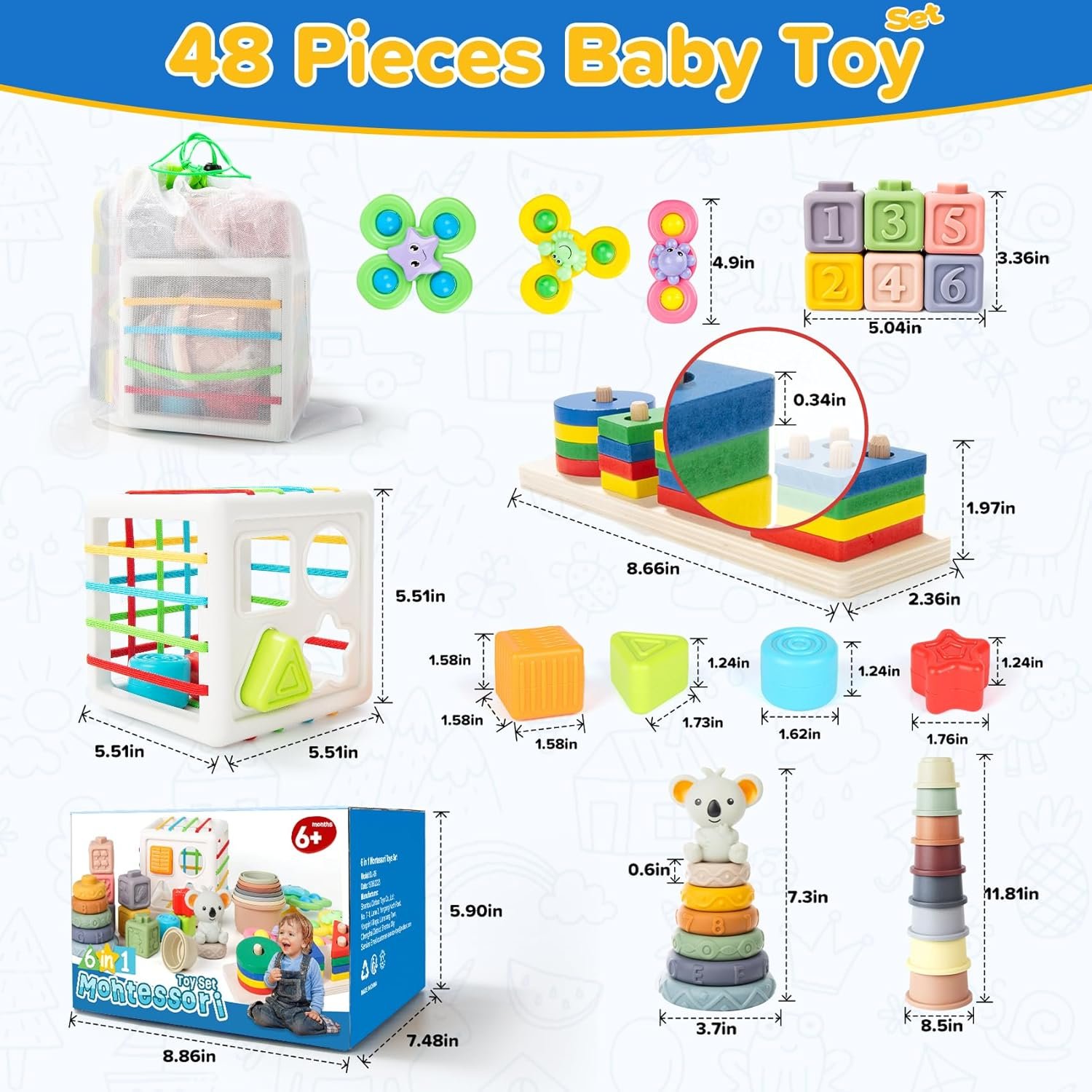
- Piece Count: 6-in-1 set including blocks, stacking rings, stacking cups, and spinner toy
- Materials: Food-grade silicone + high-quality ABS (BPA & phthalate free)
- Product Dimensions: Approx. 8.86 × 7.48 × 5.9 inches, Item Weight ~2.79 lbs
Pros
- Safe, non-toxic materials for teething infants
- Multi-sensory stacking, sorting and teether functions
- Promotes fine motor and hand-eye coordination
- Compact set ideal for travel or home play
- Montessori-inspired design with strong parent rating
Cons
- Multiple small pieces
- Blocks/cups may require supervision with younger babies
- Relatively compact set
The first year of a baby’s life is full of rapid changes—curiosity awakens, hands begin exploring, senses sharpen, and every new object becomes an opportunity to discover something about the world. That’s one of the reasons many parents look for Montessori toys for babies rather than traditional overstimulating toys with lights, batteries, or distracting sounds. Montessori toys for babies encourage real exploration, natural discovery, and hands-on learning without overwhelming the developing brain.
This 6-in-1 Montessori Baby Toy Set fits perfectly into that philosophy.
It introduces a variety of sensory and fine motor challenges while keeping everything soft, safe, and age-appropriate. What makes it stand out isn’t just how many activities are included, but how well each activity supports a different stage of early development.
What You Get in This 6-in-1 Montessori Toy Set
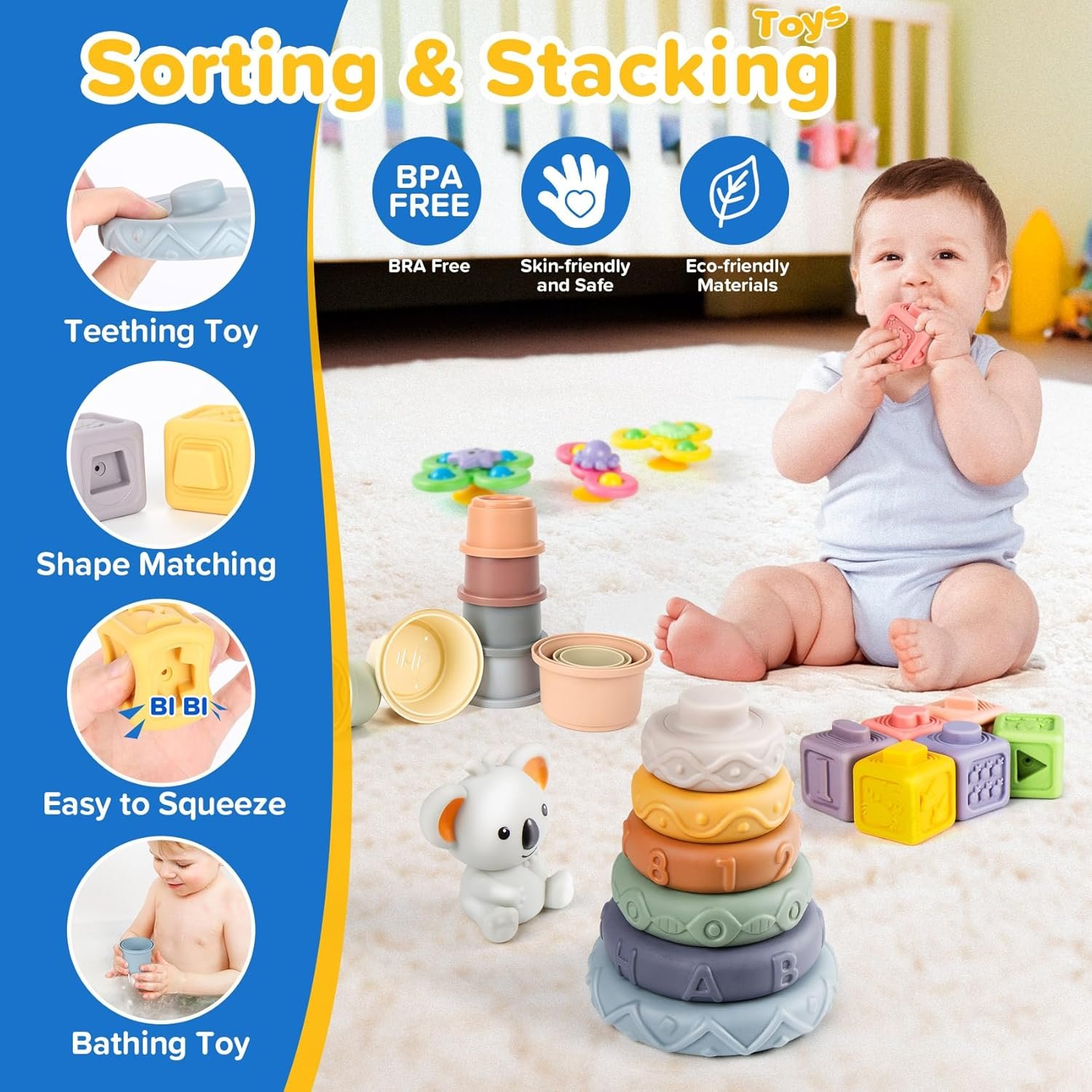
Parents quickly appreciate that this set doesn’t rely on loud noises or gimmicks. Instead, it uses simple, purposeful components that genuinely support growth. Inside this set you’ll find stacking cups, stacking rings, soft blocks, a sensory spinner, a shape-and-color sorter, and teething-friendly pieces made from soft silicone. Each part has been designed around how babies naturally learn through grasping, shaking, chewing, dropping, and repeating actions over and over.
Because everything is crafted from food-grade silicone and BPA-free ABS, babies can mouth the toys without parents worrying about chemicals or sharp edges.
Safe Materials and Thoughtful Construction
Because babies explore with their mouths long before they use their hands intentionally, materials matter. The silicone pieces in this set feel soft and flexible, which makes them ideal for teething relief and early tactile discovery. The ABS components add structure without introducing hard, sharp edges. Parents with sensitive babies appreciate that these materials don’t have the harsh plastic smell common in cheaper toys. Instead, the surfaces feel smooth, clean, and baby-friendly.
Montessori toys for babies should never overwhelm the senses, and this set respects that principle. Nothing lights up, nothing sings, nothing flashes. The value comes from the textures, the shapes, the colors, and the small challenges babies naturally want to solve. This keeps their attention longer, reduces overstimulation, and encourages deeper focus—the foundation of early concentration skills.
Layering Development-Friendly Play
This 6-in-1 Montessori Baby Toy Set really shines when you pair it with something larger like the Step2 Adventure Camper Kids Playhouse, turning sensory floor play into a full-room discovery zone. To keep the momentum going, consider a compact but powerful add-on such as the Weilim 6-in-1 Stacking Blocks & Rings Set, which brings in hands-on sorting, stacking and teething-friendly features.
Why Montessori Toys For Babies Support Better Brain Development
Montessori toys for babies are designed to align with a child’s developmental windows. Babies aren’t passive observers; they’re active learners absorbing everything through their senses. This toy set helps introduce cause and effect, spatial awareness, weight differences, texture identification, and early problem solving.
For example, a baby shaking a soft block isn’t simply playing—they’re learning about movement, rhythm, and sound. When they try to stack cups and the tower falls, they’re discovering balance and gravity. When they match shapes or attempt to place rings onto a pole, they’re refining precision, finger control, and bilateral coordination.
This style of hands-on discovery is at the heart of Montessori toys for babies. No screen can replicate the motor development happening when a baby grasps a silicone ring, flips it, squeezes it, and then tries to place it onto a stack. These small challenges shape neural pathways that later support writing, self-feeding, early math, and language development.
Stacking Rings and What They Teach
Stacking rings are one of the simplest but most important Montessori toys for babies. The rings in this set are soft, chewable, and large enough for tiny hands to hold. At first, babies mostly chew them or wave them around. But as motor skills progress, they begin attempting to place the rings on the post.
You’ll notice how babies naturally repeat the action over and over. That repetition is learning. Each attempt builds wrist stability, hand strength, and spatial awareness. When babies eventually get the ring in the right place, the look of pride is unmistakable. These micro-successes build confidence and create a positive association with challenge and perseverance.
From Floor Work to Active Exploration
The clean, BPA-free materials of the toy set make it ideal for early learning, and when placed near a mobile piece like the 3-in-1 Toddler Slide, you’re offering a gradual transition from fine-motor work to climbing and sliding. For an extra layer of thoughtful choice, a smart companion piece like the YIVEKO Baby Silicone Stacking Cups Set amplifies development with stacking, teething textures and multi-surface play.
Stacking Cups and Early Problem Solving
Stacking cups offer another layer of discovery. Babies start by knocking down towers built by parents. Over time, they try turning cups upside down, fitting them inside each other, and eventually stacking them—intentional problem-solving behavior for this age.
This makes stacking cups one of the most valuable Montessori toys for babies because they introduce size comparison, early engineering concepts, and sequencing. Parents often notice their babies returning to the cups daily because each attempt offers a slightly new challenge. The small victories—getting two cups to balance or fitting one inside another—help build patience and determination.
Blocks for Sensory Exploration
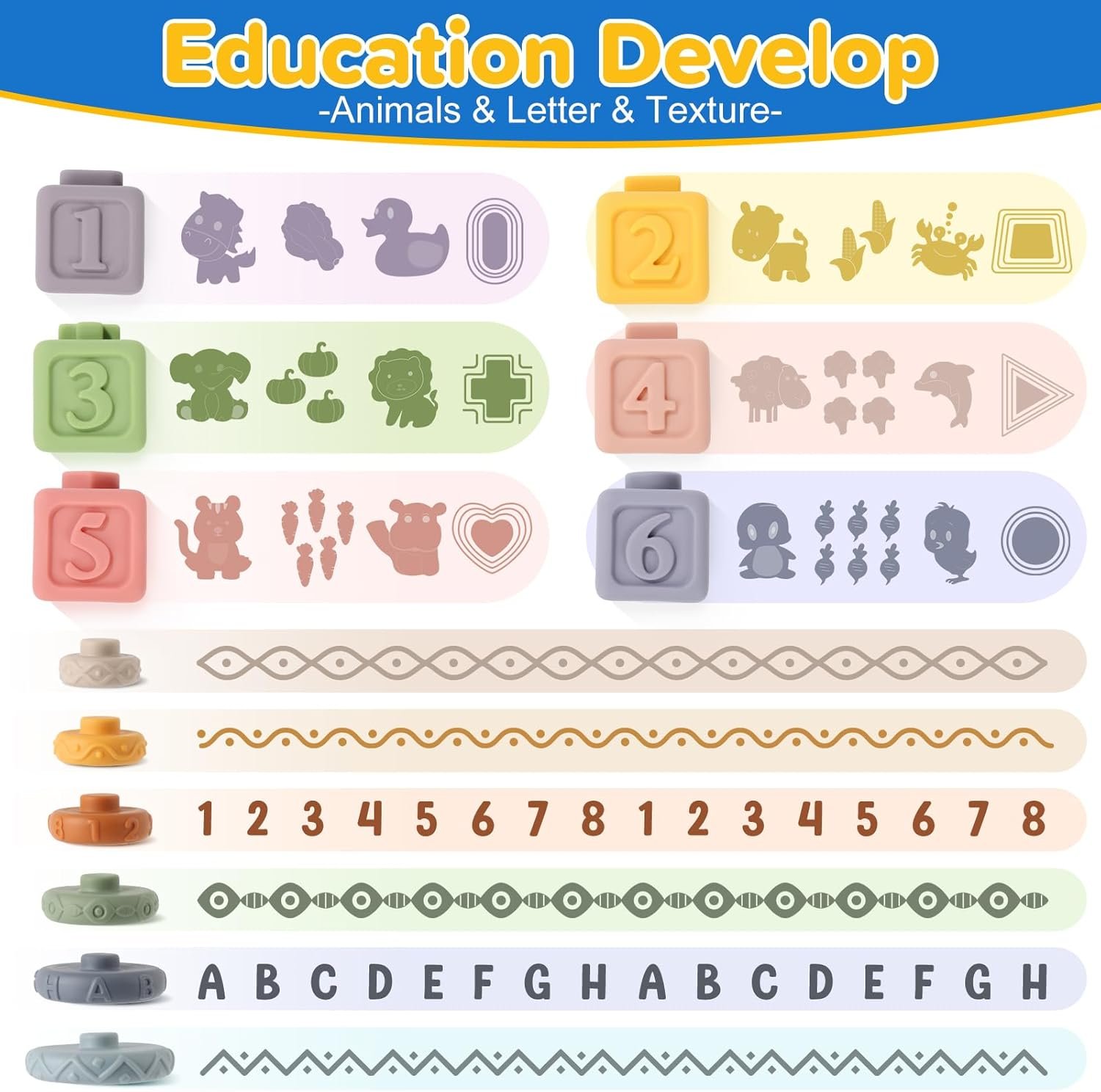
Soft blocks have a timeless appeal. Babies squeeze them, bite them, bang them together, and throw them. The blocks in this set include simple shapes, raised patterns, and numbers that stimulate touch and visual curiosity.
They become especially useful during the 9–12 month stage, when babies begin exploring cause and effect more intentionally. Two blocks in each hand help refine bilateral coordination. Eventually, babies attempt to stack blocks—a milestone that requires precision and mental planning.
Montessori toys for babies encourage children to revisit the same activity until mastery, and blocks are a classic example. They aren’t just toys—they’re tools that support early logic and motor control.
Sensory Spinner and Tactile Play
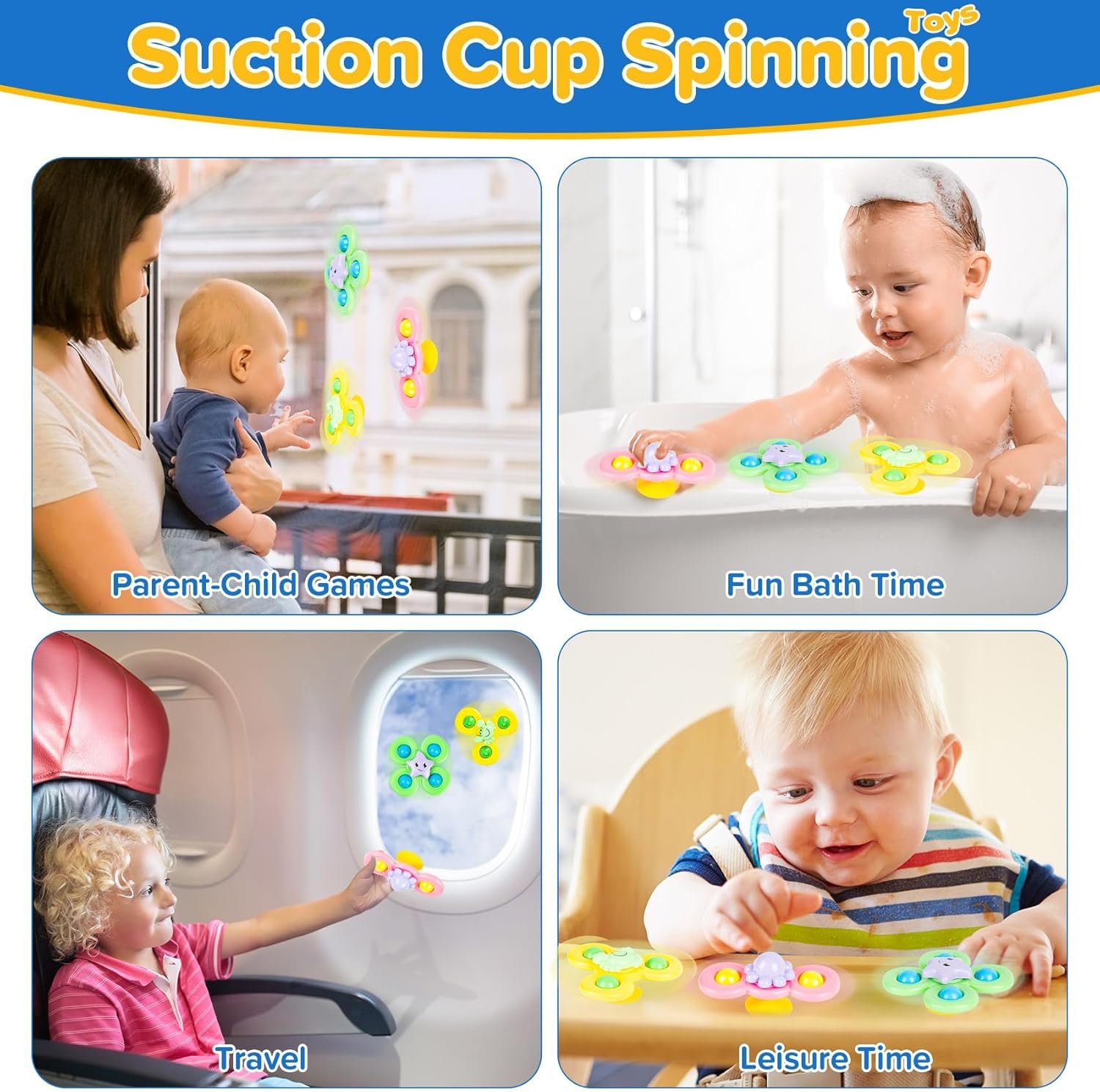
The sensory spinner adds an engaging, soothing element to the set. Babies love spinning objects, watching them turn, and feeling the subtle vibrations in their hands. The simplicity is the charm here.
Unlike overstimulating, noisy spinners found in mainstream baby toys, this one relies on natural movement. Babies learn to flick, push, rotate, and grab—movements that strengthen finger dexterity and wrist rotation.
Montessori toys for babies should build coordination without overstimulation, making this spinner a perfect addition.
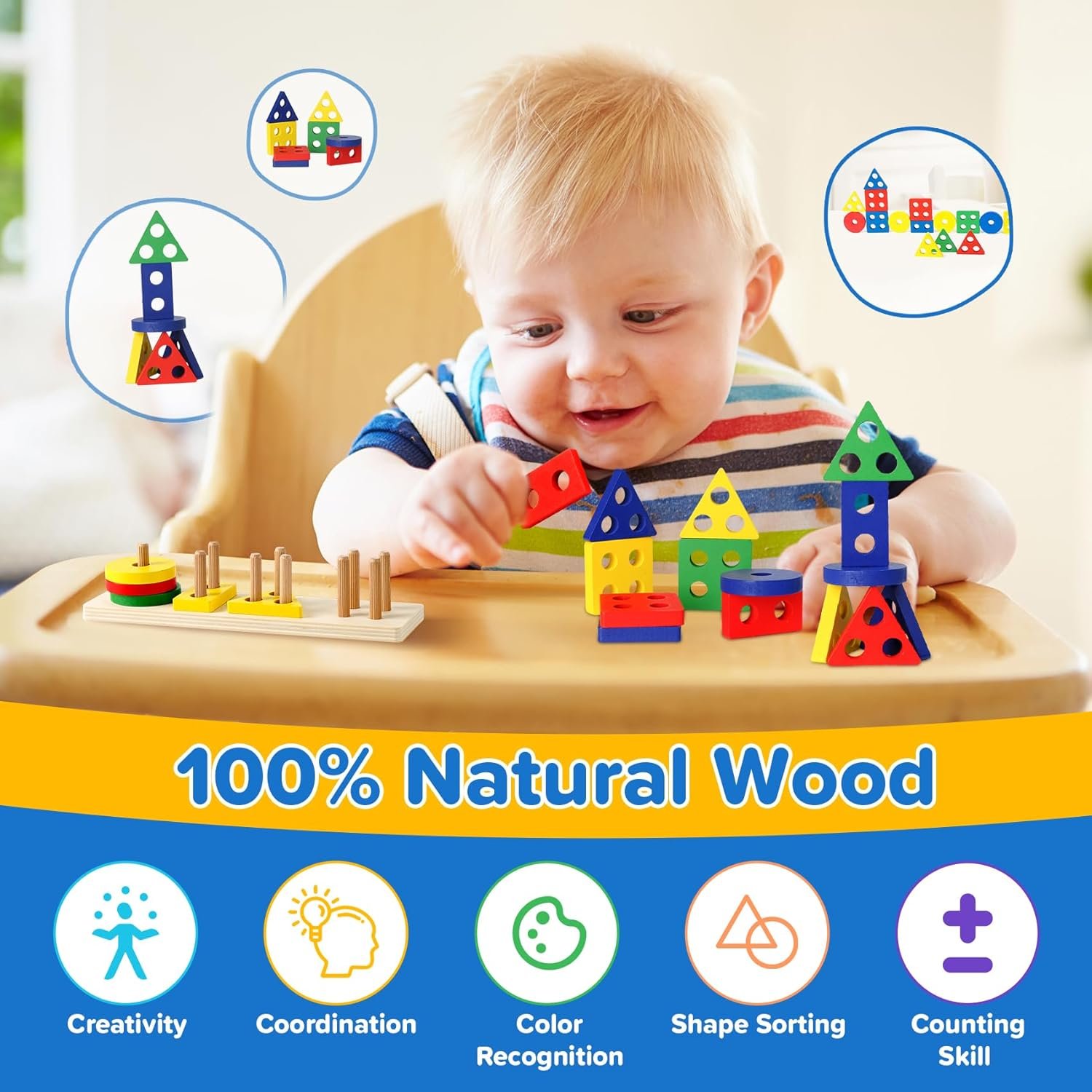
Sorting Shapes and Color Recognition
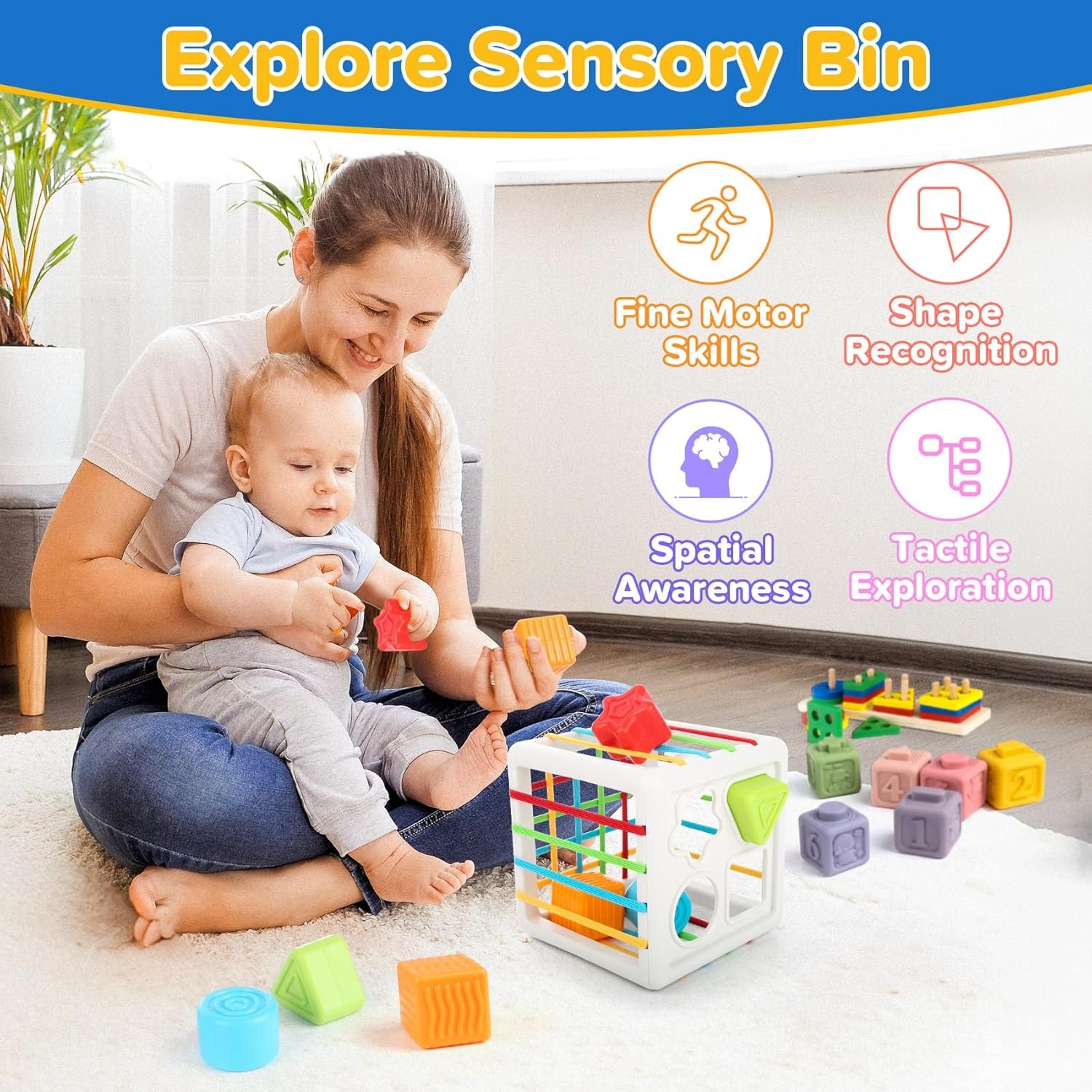
The sorting toy is one of the earliest introductions to classification and categorization—important cognitive skills. When babies attempt to insert shapes or match colors, they begin recognizing similarities, differences, and patterns.
At first, sorting might feel random. Babies will turn shapes around, mouth them, or drop them repeatedly. But over time, they start understanding that each shape fits in a specific place.
This type of matching lays the groundwork for later mathematical thinking, sequencing, and early problem-solving. It also encourages longer attention spans, something parents notice over several weeks of play.
Perfect for Home, Travel, and Daily Routines
Parents often comment that the set is compact enough to bring on vacation, to grandparents’ homes, or in the diaper bag for restaurant outings.
Montessori toys for babies don’t rely on bulky parts or batteries, so they’re ideal for travel. Babies can hold the rings in the car seat, stack cups on a plane tray, or chew blocks while waiting at appointments.
The durability also makes the set suitable for outdoor play—grass, blankets, patios, and even sand. Everything rinses clean easily, which is essential for this stage of exploration.
Real Parent Scenarios: Everyday Wins That Matter
Many of the most genuine insights about Montessori toys for babies come from parents sharing small everyday victories. One mother mentioned how her baby used to struggle with tummy time, constantly crying or giving up after a minute. Once she introduced the stacking cups and spinner during tummy time, her baby stayed engaged long enough to build arm strength and neck control.
Another parent described how her son used the silicone rings as teething comfort during a rough week of swollen gums. Instead of reaching for unsafe objects on the floor, he grabbed his rings—soft, textured, and safe for chewing.
A father said he appreciated that the set provided quiet play during early mornings. Instead of waking the whole house with battery-operated toys, his daughter sat and stacked cups while he prepared breakfast.
Parents of multiple children often say older siblings love playing with the toy set too, turning it into a bonding activity that encourages modeling and shared discovery.
These seemingly small moments illustrate why parents search for Montessori toys for babies—they support real, everyday growth without overwhelm.
Clean, Baby-Safe, and Easy to Maintain
Hygiene matters with baby toys. The silicone pieces can be boiled, wiped, or run under warm water with soap. They don’t retain odors and don’t collect dirt in crevices.
ABS pieces are equally simple to wash and dry quickly.
Parents appreciate that Montessori toys for babies must be safe for mouthing, and this set meets that expectation without compromise.
Developmental Value Through Every Stage
What makes Montessori toys for babies so powerful is their ability to grow with the child. During the 6–9 month stage, babies explore textures and shapes. At 9–12 months, they attempt stacking and sorting. Past 12 months, toddlers revisit the same toys with more precision, stacking higher, matching faster, and combining multiple toys during imaginative play.
You aren’t buying a toy for one short phase—you’re investing in early cognitive, motor, and sensory development that naturally evolves through the toddler years.
Why This Set Stands Out
Some toy sets try to do too much and end up overwhelming babies. Others are too simple and lose appeal within a week. This set finds the ideal balance.
The variety keeps babies engaged, the materials are safe and durable, and the developmental value aligns with Montessori principles.
Parents searching for Montessori toys for babies often want something that is quiet, purposeful, and encourages natural exploration. This set checks every box, providing structure without limitation.
How Babies Interact With Montessori Toys Over Time
One of the most remarkable things about Montessori toys for babies is how differently children interact with them as they grow. Early on, babies mostly explore with their senses. They squeeze the silicone rings, turn the blocks over curiously, and test the edges of the cups with their gums. At this stage, everything is about “What does this feel like?” and “What happens when I touch this?” There is no right or wrong way for them to play—just discovery in its purest form.
As the months pass, play becomes more intentional. Babies begin combining pieces, trying to balance a block on a cup, or placing rings inside each other. These small experiments show how Montessori toys for babies encourage logic and creativity without forcing outcomes. Unlike toys with flashing lights that dictate how a child must respond, this set allows babies to explore freely, leading to richer engagement and deeper learning.
Around the one-year mark, parents often notice a shift. Babies start returning to certain toys repeatedly—not out of habit, but out of genuine interest. They begin stacking cups into tall towers, matching shapes more accurately, or spinning the sensory disc with a sense of anticipation. These small improvements are signs of growing intelligence, coordination, and confidence. They also show how well-designed Montessori toys for babies support natural progression without overstimulation.
Encouraging Independent Play
Independent play is one of the most valuable outcomes parents hope to cultivate in the first years. Babies who learn to entertain themselves for even short periods develop better focus and confidence gradually. This set encourages that kind of independence because each piece is safe, easy to grasp, and interesting enough to explore alone.
Parents often share that their babies will sit with the cups or rings for several minutes at a time—longer than with battery-operated toys that quickly lose novelty. Montessori toys for babies hold attention because they’re open-ended. There’s no “finished” state, no pre-programmed sequence to follow, and no artificial sounds interrupting concentration. The baby drives the experience, not the toy.
This independence is particularly helpful during daily chores. Parents say they can prepare breakfast or fold laundry while their baby sits nearby, happily turning blocks in their hands or trying to stack two simple cups together. These peaceful minutes might seem small, but they support a healthy foundation for self-directed learning later on.
Emotional Development Through Play
Many parents don’t realize how deeply emotional development is connected to hands-on play. Montessori toys for babies help foster patience, problem-solving, and resilience. When a baby tries to stack a cup and it falls, they often try again—and again. This repetition strengthens not only coordination but also emotional regulation.
One parent shared a touching moment involving the blocks. Her daughter spent a week trying to create a two-block tower without it toppling. Each day she tried with a little more precision, and when she finally placed the second block successfully, she beamed with pride. That sense of achievement isn’t prompted by lights or applause—it comes from genuine effort and discovery.
Montessori toys for babies support these moments naturally. They challenge without frustrating and reward without overstimulating. Babies feel safe experimenting, failing, and trying again until they succeed. These emotional victories—small as they seem—shape persistence, self-trust, and early confidence.
Strengthening Parent–Child Connection
Open-ended toys like these also enhance bonding moments. Parents often sit beside their babies, narrating what they see: “You’re turning the cup. You found the ring. Look how you stacked two blocks!” This simple narration, combined with physical interaction, boosts early language development.
Montessori toys for babies inspire parents to follow their child’s lead instead of guiding every step. This encourages responsive parenting, which research shows strengthens attachment. Instead of saying “Do it like this,” parents often observe first, then join the play in subtle ways that support curiosity without taking away autonomy.
Families also create routines around these toys. Some parents bring out the set each morning as part of a calm wake-up ritual. Others use it after meals or during quiet afternoons. These pockets of calm, focused play create warm shared experiences that babies associate with comfort and learning.
A Window Into Early Personality
Another benefit of Montessori toys for babies is how they reveal a child’s emerging personality. Some babies become “stackers,” obsessing over building and balancing. Others become “sorters,” fascinated by matching colors or shapes. Some explore each piece methodically, while others prefer fast, energetic play.
Parents often say this set helped them see how their child naturally approaches challenges. One mother shared that her son always reached for the rings first, turning each one around with precision before deciding what to do next. This early preference aligned with his later love of building and puzzles.
Another parent noticed her daughter gravitated toward the sensory spinner, focusing intently on the movement and subtle sound. She described her as “calm, observant, and patient,” traits the spinner seemed to nurture even further.
Montessori toys for babies don’t force a learning style—they highlight one. They let parents better understand the child’s natural rhythm, preferences, and early strengths.
Longevity That Grows With the Child
Parents often worry that baby toys have short lifespans. Many products are exciting for a week or two, then collect dust. But Montessori toys for babies are intentionally timeless. Their simplicity gives them long-term appeal.
The stacking cups evolve from chewable bath toys to early math tools. The rings go from teething relief to color-sequencing activities. The blocks transform into imaginative play pieces for toddlers. Even the shape sorter becomes more advanced when toddlers begin identifying colors, matching patterns, or building simple structures.
Families regularly say this set remains relevant well beyond 18 months. Toddlers use it differently—more creatively, more intentionally—and the toys support early preschool skills like counting, sorting, and spatial reasoning.
Many parents pack the toys in their diaper bags or take them to appointments because they’re clean, silent, and endlessly useful.
Household Practicality and Everyday Ease
Parents appreciate toys that don’t add stress to the home. This set ranks high in practicality because it is:
- quiet
- washable
- soft
- safe
- flexible
- travel-friendly
There are no batteries to replace or tiny pieces to worry about. Everything stacks, nests, or fits easily into a single container. Montessori toys for babies should simplify life, and this set does exactly that.
One mom mentioned she leaves the cups on a low shelf so her child can access them independently—following Montessori principles of accessibility. The result? Her baby learns autonomy in small ways every day, choosing when and how to play without requiring setup from adults.
Real Testimonials That Reflect Everyday Parenting
Parents frequently describe small but meaningful moments when these toys supported their baby’s development.
One mother described how the spinner kept her daughter calm during diaper changes. Another father said he used the cups during bath time to encourage pouring and scooping, which improved wrist control. A parent of a teething baby praised the silicone rings for surviving weeks of biting without tearing or retaining odors.
These testimonials highlight the diverse ways Montessori toys for babies integrate into daily routines—not as special-event toys, but as dependable companions for real family life.
Why Montessori Toys Continue to Outperform Trendy Baby Gear
Trendy toys often fade because they rely on novelty. Montessori toys for babies rely on discovery, which never loses appeal. They encourage children to explore what they can do, not what the toy does for them. That’s why sets like this remain relevant for months or years instead of days.
They support motor development, sensory awareness, logical thinking, independence, and emotional regulation—skills that matter long after the baby stage.
A Toy Set That Truly Earns Its Place
When parents choose Montessori toys for babies, they’re choosing simplicity, durability, and meaningful play. This 6-in-1 set embodies those values beautifully. Each piece invites exploration without overstimulation and supports the natural progression of development from 6 months onward.
For parents seeking toys that genuinely make a difference—not just clutter the playroom—this set stands out as one of the most thoughtful, versatile, and development-focused options available today.
Final Thoughts on Choosing Montessori Toys for Babies
Parents today are more intentional about the toys they choose. They want toys that support growth, not distract from it. They want materials that feel good, designs that look good, and activities that feel meaningful.
This 6-in-1 Montessori Baby Toy Set accomplishes all of that.
It’s not flashy—but it’s deeply engaging.
It’s not loud—but it’s developmentally rich.
It’s not complicated—but it’s incredibly effective.
For families prioritizing gentle learning, sensory development, fine motor skills, independence, and calm, purposeful play, this set is one of the best Montessori toys for babies in its age range.


